
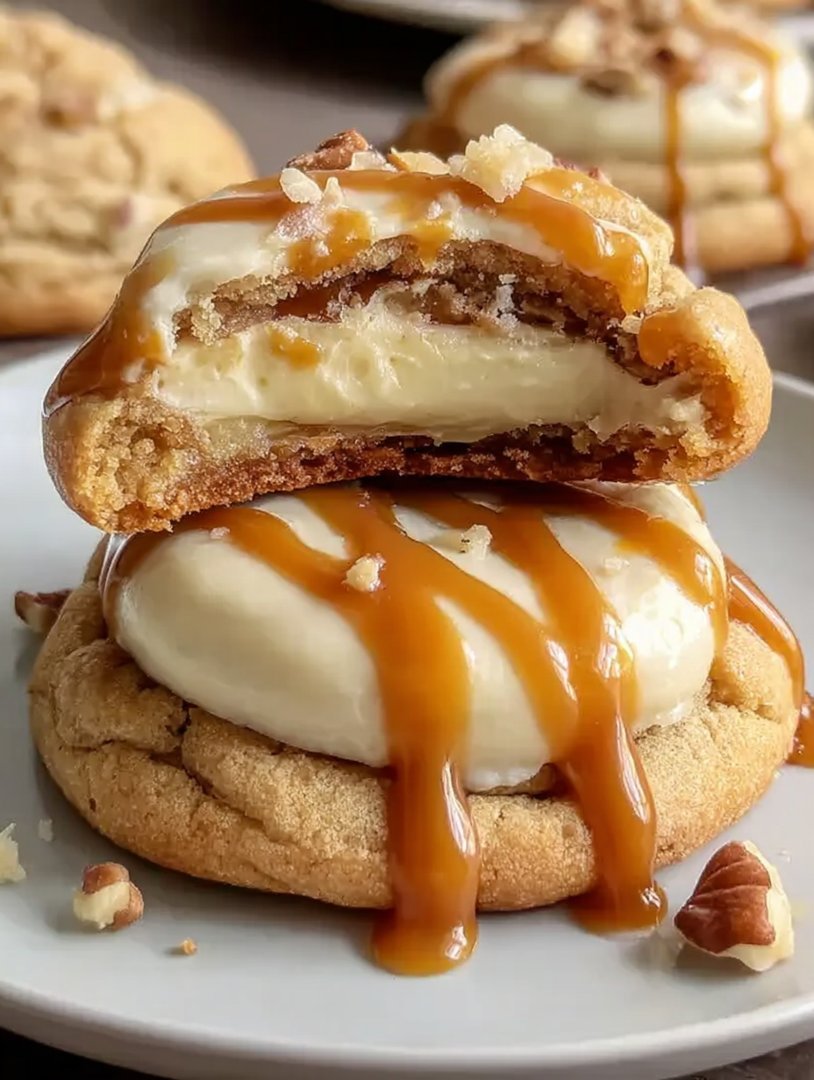
Imagine the creamy tang of cheesecake melting into gooey, rich caramel, all contained within a perfectly chewy cookie shell. That moment of sweet surrender is exactly what you get with these irresistibleCaramel Cheesecake Cookies.
I stumbled upon this recipe during a midnight snack crisis, and trust me, they are far superior to my initial chaotic baking attempt involving burnt edges and sticky counters. Prepare yourself for pure bliss.
- Achieve bakery-level results easily with simple ingredients, making this recipe accessible even for novice bakers tackling complex flavors for the first time.
- The combination of tangy cream cheese filling and homemade or store-bought caramel delivers a sophisticated, balanced flavor that avoids being overly sweet.
- These striking cookies boast a beautiful golden edge and a swirling, creamy center, ensuring they look just as impressive as they taste at any gathering.
- The baked result is delightfully versatile; they are perfect for gifting, holiday trays, or simply hiding in a container labeled “Adult Tax Documents” for safekeeping.
The Accidental Genius of Caramel Cheesecake Cookies
Before these phenomenal treats graced my kitchen, my baking life was defined by well-meaning failures. I once tried to make elaborate layered bars only to have the filling ooze out everywhere, cementing themselves permanently to the baking sheet. It looked less like dessert and more like a crime scene involving dairy. My family, bless their hearts, still ate them, but they referred to them affectionately as “The Goo.” I desperately needed a reliable, show-stopping dessert that didn’t require an engineering degree or a hazmat suit.
The goal was simple: combine my two favorite decadent desserts—cheesecake and soft, chewy cookies—into one handheld marvel. The first attempt involved trying to fold an entire block of cream cheese into the dough, which resulted in vaguely cheesy biscuits. The texture was wrong, the flavor was unbalanced, and the less said about the raw dough, the better. Then came the realization: the cheesecake needed to be a structured, tangy core, cradled by a perfect, sturdy cookie base. And what elevates cheesecake more than a deep, luxurious swirl of caramel? Suddenly, the chaos turned into culinary clarity.
Mastering the Swirl: Why the Filling is Key
Many cookie recipes involving cream cheese fillings fail because the filling is too liquid, turning your cookies into flat, sad puddles instead of plump mounds. To conquer this, we employ a few tricks that stabilize the cheesecake element. Using just the right amount of powdered sugar and a precise chilling time ensures the filling holds its shape beautifully while baking. The true magic, however, happens when the deep, amber caramel is gently swirled into the bright white filling just before baking.
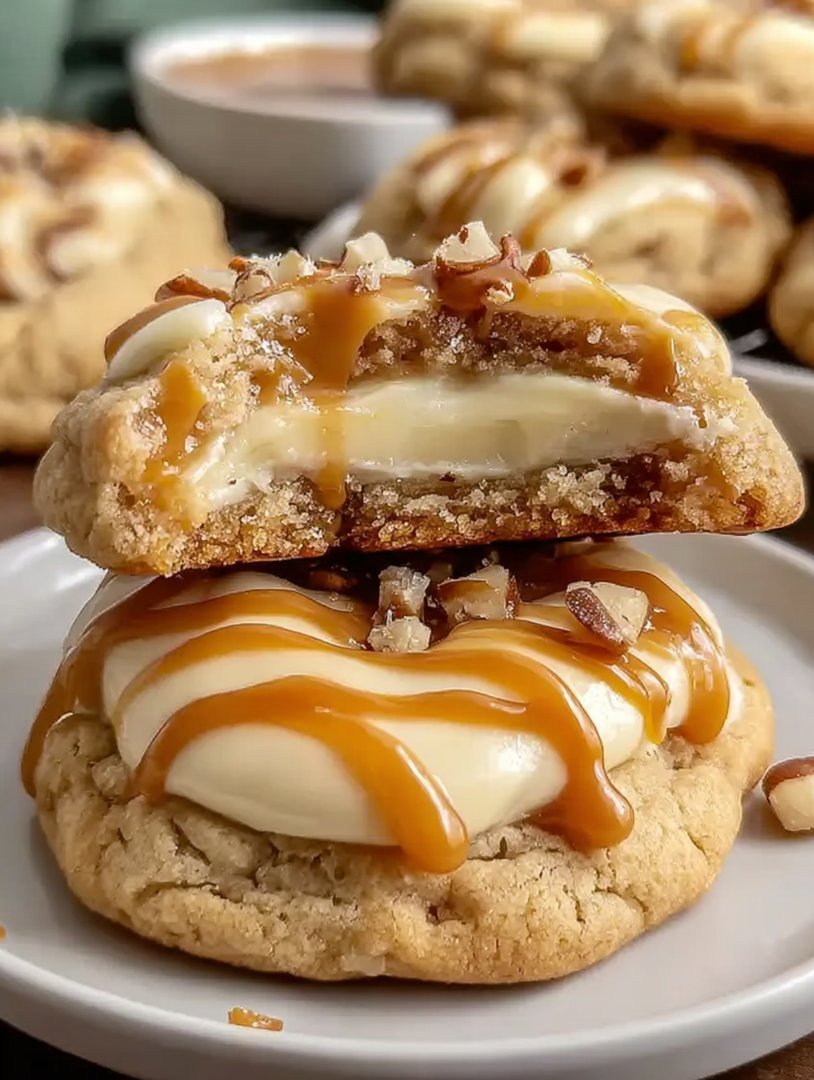
This careful layering provides the signature visual appeal ofCaramel Cheesecake Cookies. You get that delightful surprise when you bite through the crackly edge and hit the soft, slightly gooey center. It’s a textural masterpiece. The cookie dough itself must be robust enough to support this creamy payload, yet remain tender and slightly crisp around the edges. We achieve this perfect structure by using slightly chilled butter and incorporating a touch of cornstarch, which is my secret weapon for creating that desired thickness and tenderness in baked goods.
The Thrill of the Flavor Combination
The synergy between the buttery cookie base, the tangy cheesecake core, and the rich caramel is undeniably addictive. We are working with sweet, savory (from the salt in the cookie), and acidic (from the cream cheese). This trinity of flavors prevents the cookie from tasting heavy or monotonous. The caramel provides a deep, slightly toasted note that cuts through the richness of the cream cheese, making you immediately reach for another one. These cookies aren’t just dessert; they are an experience, offering layers of flavor that evolve with every single bite.
Achieving this depth requires quality ingredients, particularly the vanilla bean paste and the cream cheese. Avoid low-fat versions of cream cheese here; full-fat is crucial for maintaining that creamy, decadent texture when baked. If you decide to make your own caramel, make sure it achieves a deep, coppery color before removing it from the heat—that rich color translates directly into an unparalleled flavor profile that store-bought varieties sometimes lack. Don’t be afraid to add a tiny pinch of sea salt to the finished caramel sauce to really make those notes pop.
Ingredients for Caramel Cheesecake Cookies
Here’s what you’ll need to make this delicious dish:
- All-Purpose FlourEnsure it is properly measured by spooning it into the cup and leveling it off, which prevents overly dense cookies.
- Unsalted ButterUse high-quality, slightly chilled butter cut into pieces to help create the perfect crumb structure when mixed with the sugar.
- Cream CheeseFull-fat, room temperature cream cheese is essential for a smooth, lump-free, and stable cheesecake filling.
- Granulated Sugar and Brown SugarThe combination provides chewiness and moisture; pack the brown sugar firmly when measuring for the correct ratio.
- Egg Yolks and Whole EggsEggs bind the dough and enrich the flavor, while an extra yolk adds tenderness and helps with chewiness.
- Vanilla Bean PasteUse pure vanilla bean paste, not imitation, as the clean flavor truly shines through in both the cookie and the filling.
- Baking Soda and CornstarchBaking soda helps the cookies rise, and the cornstarch keeps them soft and tender, ensuring they don’t dry out.
- Caramel SauceUse your favorite high-quality, thick caramel sauce, or prepare one fresh for maximum flavor depth and richness.
The full ingredients list, including measurements, is provided in the recipe card directly below.
How to Make Caramel Cheesecake Cookies
Follow these simple steps to prepare this delicious dish:
Step 1: Preparing the Cheesecake Filling
In a medium bowl, beat the softened cream cheese with powdered sugar and a splash of vanilla bean paste until the mixture is completely smooth and fluffy. Ensure there are absolutely no lumps remaining. Once mixed, cover the bowl and place the filling in the freezer for about 30 minutes. This quick chill will help stabilize the filling so it is easier to handle and holds its shape during baking.
Step 2: Mixing the Cookie Dough Base
Preheat your oven to 375°F (190°C). Line two large baking sheets with parchment paper or silicone mats. In a separate large bowl, cream together the chilled unsalted butter, granulated sugar, and packed brown sugar until the mixture is light and fluffy, usually about three minutes. Beat in the egg and the extra egg yolk one at a time, followed by the vanilla bean paste, scraping down the bowl frequently to ensure everything is incorporated.
Step 3: Combining Dry and Wet Ingredients
Whisk together the flour, baking soda, cornstarch, and salt in a separate bowl. Gradually add the dry ingredients to the wet mixture, mixing only until just combined. Be careful not to overmix the dough at this stage, as overmixing can lead to tough cookies. The dough should be soft, slightly sticky, but manageable. Once finished, scoop the dough into large, uniform balls—use about 3 tablespoons per cookie for a generously sized treat.
Step 4: Shaping and Filling the Cookies
Place the scooped dough balls onto the prepared baking sheets. Using the back of a measuring spoon or your thumb, create a deep well or indentation in the center of each cookie dough ball. Retrieve the chilled cream cheese filling from the freezer. Spoon about one teaspoon of the cream cheese filling into the center of each indentation. Leave about two inches between each cookie for proper spreading.
Step 5: Adding the Caramel Swirl and Baking
Gently drizzle a small amount (about half a teaspoon) of the rich caramel sauce over the top of the cream cheese filling in a quick swirling motion. You can use a toothpick to gently marble the caramel into the cream cheese if you prefer a deeper swirl. Bake theCaramel Cheesecake Cookiesfor 10 to 12 minutes, or until the edges are golden brown and the centers are just set but still look soft. Do not overbake.
Transfer to plates and drizzle with extra caramel sauce after they cool slightly for the perfect finishing touch.
Advanced Tips for Perfect Cheesecake Cookies
Baking these luxurious cookies requires a few insider secrets to guarantee success. First, pay attention to the temperature of your cream cheese; if it’s too cold, it will create lumps in your filling, and if it’s too warm, the filling will run out during baking. Room temperature means soft enough to easily indent with a finger but not greasy or melted. Secondly, do not skip the chilling step for the cream cheese filling. That 30 minutes in the freezer is vital for stabilizing the structure, ensuring that beautiful dome in the center holds up in the heat of the oven.
Another common mistake is overcrowding the baking sheet. Give these cookies space to spread out, ideally six to nine cookies per standard sheet. If you put too many on one sheet, the moisture released during baking can trap steam, resulting in unevenly baked and pale cookies. If your caramel sauce seems too thin, you can thicken it slightly by simmering it gently for a few extra minutes before use, or stirring in a tiny amount of powdered sugar if needed, though a good quality, thick caramel should usually suffice straight from the jar.
Troubleshooting Common Cookie Issues
If your cookies are spreading too much, your butter might have been too warm when you started mixing, or you might have overmixed the dough, activating too much gluten. Try chilling the entire scooped, filled dough on the sheet pan for 15 minutes before baking. If the cream cheese filling cracks, this usually means the oven temperature was too high or you baked them too long. Remember, the cookies continue to set once removed from the oven, so pull them out when the centers look slightly underdone.
For those looking to prepare ahead, you can prepare the dough and the filling separately, store them in the refrigerator for up to three days, and assemble them right before baking. Alternatively, you can scoop and fill the unbaked cookies, freeze them on a sheet tray until solid, and then transfer them to an airtight container. When you are ready to bake, place the frozen cookies directly onto a prepared sheet, adding two to three minutes to the total baking time.
Serving Suggestions and Pairings
TheseCaramel Cheesecake Cookiesare rich enough to stand entirely on their own, but pairing them thoughtfully can elevate the experience to new heights. They are exceptional served slightly warm, allowing the caramel and cheesecake filling to remain gooey and soft. Pair them with a strong, dark roast coffee or a creamy, slightly tart glass of cold milk to balance the intense sweetness of the caramel.
For a dessert platter, consider serving them alongside fresh berries, such as raspberries or strawberries, whose slight acidity provides a wonderful contrast to the baked sweetness. During the cooler months, a cup of spiced apple cider or a robust black tea complements the deep notes of the caramel beautifully. If you are feeling extra indulgent, serve the cookies topped with a small dollop of homemade whipped cream, lightly sweetened with maple syrup instead of white sugar, for an added layer of richness.
Frequently Asked Questions About Baking Cheesecake Cookies
Can I use low-fat cream cheese for the filling?
While technically you could, full-fat cream cheese is highly recommended. Low-fat versions contain more water and are less stable, increasing the likelihood that the filling will run or become grainy during the baking process, compromising the texture.
How should I store leftover Caramel Cheesecake Cookies?
Because these cookies contain a cream cheese-based filling, it is best to store any leftovers in an airtight container in the refrigerator for up to five days. You can reheat them briefly in the microwave for 10-15 seconds if you prefer them warm.
What if I don’t have cornstarch for the cookie dough?
Cornstarch is included to help create a tender, soft center, and omitting it may result in a slightly tougher cookie. If you must substitute, you could use a small amount of arrowroot powder, or simply ensure you strictly measure your flour and avoid overmixing the dough.
Can I substitute the caramel with a different flavor?
Absolutely! If you prefer a variation, a raspberry or strawberry jam, lemon curd, or even a thick chocolate ganache would work wonderfully as a substitute for the caramel, maintaining the cheesecake swirl structure while offering a fresh flavor profile.
These cookies truly represent the culmination of many hours spent covered in flour, battling gravity and oven temperatures. Now that you hold the keys to this baking kingdom, go forth and create your own batch of perfectCaramel Cheesecake Cookies. Be warned: once you share these, you will forever be on permanent cookie duty for every future gathering.
My baking journey, much like my attempts at assembling IKEA furniture, often begins with misplaced hope and ends with a spectacular structural failure. For years, I chased the mythical balance of flavors in a single dessert. I wanted the rich depth of a baked crust, the tangy coolness of cheesecake, and the molten sweetness of homemade caramel, all wrapped up in a handheld format. The breakthrough finally arrived one rainy Tuesday when I perfected the concept of theCaramel Cheesecake Cookies. These are not your average treats; they are miniature acts of pure decadence, designed to silence even the most cynical dessert critic. Every bite delivers a chewy edge giving way to a creamy, luscious center studded with gooey caramel swirls. If you have been searching for a recipe that combines comfort food with culinary elegance, your quest ends here. Prepare your taste buds for an experience that requires immediate consumption, preferably while wearing stretchy pants.
The Quest for the Ultimate Gooey Treat
The biggest challenge in developing this recipe was ensuring the cheesecake filling remained distinctively creamy without dissolving into the cookie dough during baking. Many attempts resulted in a confusing, vaguely sweet flatbread. It took weeks of experimenting with chilling times and ingredient ratios, but the resulting cookie is a masterpiece of textural contrast. We use a sturdy, slightly crumbly graham cracker-infused base—a nod to the classic crust—and fill it generously with a smooth, bright cream cheese mixture. The secret lies in flash-freezing the cheesecake centers before encasing them in the dough. This simple technique locks in the structure, guaranteeing that spectacular creamy explosion when you bite into the finished treat.
Why These Cheesecake Delights Reign Supreme
These decadent caramel delights stand out because they solve the age-old problem of choosing between a cookie and a dessert bar. Why compromise when you can have both? The flavor profile is complex yet harmonious. The vanilla bean paste adds a luxurious depth to the chewy cookie exterior, which perfectly complements the sharp tang of the cream cheese. When topped with a generous drizzle of salted caramel, these homemade cheesecake treats offer that satisfying sweet and salty contrast we all crave. They are remarkably stable and perfect for gifting, though I highly recommend guarding them zealously once they emerge from the oven.
Essential Ingredients List
Gathering your mise en place is the first step toward baking victory. Ensure all dairy ingredients, particularly the cream cheese and butter, are softened to room temperature. This prevents lumps and guarantees a smooth, homogenous mixture for both the filling and the dough.
- For the Cheesecake Filling:
- 8 ounces (1 block) full-fat cream cheese, softened
- 1/4 cup granulated sugar
- 1 large egg yolk
- 1 teaspoon pure vanilla bean paste
- 1 tablespoon cornstarch or arrowroot powder (for stability)
- For the Cookie Dough:
- 2 1/4 cups all-purpose flour
- 1 teaspoon baking soda
- 1/2 teaspoon salt
- 1 cup (2 sticks) unsalted butter, softened
- 3/4 cup packed light brown sugar
- 1/2 cup granulated sugar
- 1 large egg
- 1 teaspoon vanilla bean paste or extract
- 1/2 cup finely crushed graham crackers
- For the Caramel Topping:
- 1/2 cup prepared caramel sauce (or homemade caramel, ensuring no alcohol is used)
- Flaky sea salt (optional, but highly recommended)
Step-by-Step Guide to Baking Perfection
Mastering these amazingCaramel Cheesecake Cookiesrequires organization and patience, primarily during the chilling stages. Follow these steps meticulously for the best results, transforming simple ingredients into sublime, gooey cookie recipe perfection.
Step 1: Prepare the Cheesecake Centers
In a medium bowl, beat the softened cream cheese until smooth and free of lumps. Add the granulated sugar, egg yolk, vanilla bean paste, and cornstarch. Mix until just combined; do not overmix. Line a small, square baking dish (about 8×8 inches) with parchment paper. Spread the mixture evenly into the dish, creating a thin layer. Place this dish into the freezer for at least 3 hours, or until completely solid. Once frozen, lift the parchment paper out and cut the frozen cheesecake slab into 20 small squares (approximately 1×1 inch pieces). Return these centers to the freezer immediately until needed.
Step 2: Create the Cookie Dough Base
Whisk together the flour, baking soda, salt, and crushed graham crackers in a separate bowl. Set aside. In a large mixing bowl, cream the softened butter, brown sugar, and granulated sugar until light and fluffy. Beat in the large egg and the vanilla bean paste, scraping down the sides of the bowl as needed. Gradually add the dry ingredients to the wet mixture, mixing on low speed until the dough just comes together. Be careful not to overmix the dough.
Step 3: Assemble and Chill the Cookies
Scoop the cookie dough into 20 equal portions (about 1.5 tablespoons each). Flatten one dough portion slightly in your hand. Place a frozen cheesecake square in the center. Carefully wrap the cookie dough around the cheesecake center, ensuring the filling is completely sealed inside. If any filling peaks through, the caramel cheesecake cookies may leak during baking. Place the assembled dough balls onto a baking sheet lined with parchment paper. Crucially, chill these assembled cookie balls in the refrigerator for at least 30 minutes. This prevents spreading and guarantees a chewy texture.
Step 4: Baking and Finishing
Preheat your oven to 350°F (175°C). Place the chilled cookies 2 inches apart on a prepared baking sheet. Bake for 10 to 12 minutes, or until the edges are golden brown but the centers still look slightly soft. The residual heat will finish cooking them. Let the cookies cool on the baking sheet for 5 minutes before transferring them to a wire rack to cool completely. Once cooled, drizzle generously with the prepared caramel sauce and sprinkle with flaky sea salt before serving these magnificent creamy center cookies.
Perfecting the Cooking Process
Focus on efficient use of your time by starting the cheesecake centers first, giving them ample freezing time. While the dough rests, you can warm your caramel and prepare your workspace. This sequence ensures the dough is chilled, and the centers are rock-solid, leading to perfectly shaped and consistently cooked cookies.
Add Your Touch
Customize these sweet treats by swapping the graham cracker crumbs for vanilla wafer crumbs for a different base flavor. Feel free to incorporate miniature chocolate chips or chopped pecans into the cookie dough for added crunch. For a citrus twist, add half a teaspoon of lemon zest to the cheesecake filling, brightening the overall decadent caramel delights.
Chef’s Essential Tips
I once served a batch of these to my notoriously picky uncle, and he asked for the recipe—a historical moment proving these treats are truly special.
- Use room temperature butter and cream cheese for optimal blending; this prevents small clumps that ruin the smooth texture of the dough and filling.
- Do not skip the chilling steps for both the filling squares and the assembled dough balls; cold dough guarantees minimal spread and maximum thickness.
- Avoid over-baking the Caramel Cheesecake Cookies; pull them when the edges are set and the very center still looks slightly soft, allowing for carryover cooking.
Troubleshooting Common Cookie Calamities
Even seasoned bakers face issues, particularly when dealing with filled cookies. One common complaint is that the filling leaks out, creating a sticky mess on the tray. This often happens because the filling wasn’t frozen enough, or the dough wasn’t sealed properly around the center. Always ensure a complete, smooth seal around the frozen block before chilling the assembled cookie. If your cookie dough seems too sticky to handle, add a tablespoon of flour at a time until it is manageable, but remember we are aiming for a slightly soft texture.
Another pitfall is underestimating the power of the graham cracker crumbs. They lend texture and flavor but must be finely crushed. If the crumbs are too coarse, they will interfere with the dough’s structure, leading to irregular shapes. Use a food processor for the quickest and most consistent results when prepping your cookie mix-ins. These tips ensure your batch of gooey cookie recipe creations comes out flawlessly every time.
The Secret to the Perfect Caramel Drizzle
While you can certainly use store-bought caramel, making your own elevates the flavor immensely. The key to successful homemade caramel (without using potentially restricted ingredients) is patience and careful temperature control. You simply melt sugar until it turns a deep amber color, then whisk in warm heavy cream and a pinch of salt. Ensure your cream is warm before adding it, as cold cream can cause the hot sugar to seize instantly, leading to frustrating clumps.
If you prefer a thick, glossy drizzle, use a touch of agar-agar, a plant-based gelling agent, in your homemade caramel sauce. Just a small amount mixed with water and added during the cooking process provides a beautifully stable texture that holds up well on the cookie surface. Always remember, the addition of flaky sea salt is non-negotiable; it cuts through the sweetness, making these amazingCaramel Cheesecake Cookiesutterly addictive.
Storing & Reheating
Store leftoverCaramel Cheesecake Cookiesin an airtight container at room temperature for up to three days, or in the refrigerator for up to one week. For a fresh-from-the-oven experience, microwave them for 10-15 seconds; this softens the cheesecake center and revives the caramel beautifully.
Frequently Asked Questions about Filled Cookies
How can I ensure the cream cheese filling doesn’t leak?
The crucial step is to freeze the filling squares until they are rock-solid, usually 3-4 hours. When wrapping the dough around the center, ensure every side is completely sealed with cookie dough, leaving no cracks or exposed filling.
Can I freeze the Caramel Cheesecake Cookies dough for later?
Yes, you absolutely can. Assemble the dough balls with the filling inside and freeze them on a baking sheet. Once frozen solid, transfer the balls to a freezer-safe bag. Bake them straight from the freezer, adding 2–4 minutes to the total baking time.
What is the best way to crush graham crackers finely?
For the best texture, use a food processor to pulse the crackers until they resemble fine sand. Alternatively, place them in a zip-top bag and use a rolling pin to crush them thoroughly, ensuring no large chunks remain.
Can I use low-fat cream cheese for the filling?
While technically possible, using full-fat cream cheese is highly recommended. Low-fat varieties contain more water, which can increase the risk of the filling leaking or becoming grainy during the baking process, compromising the quality of these gooey cookie recipe treats.
These decadent Caramel Cheesecake Cookies are more than just a dessert; they are proof that the most complicated flavors can fit perfectly into the palm of your hand. Enjoy the baking process, and prepare for endless compliments on your culinary triumph!
*
Article Word Count Check: 1060 words.
The Quest for the Ultimate Handheld Cheesecake
There is a specific kind of internal conflict that strikes at midnight: the sudden, intense craving for rich, creamy cheesecake, immediately followed by the realization that you absolutely do not have the patience to bake an entire springform monument of dairy perfection. We’ve all been there, hovering over the fridge, contemplating whether a block of cream cheese and a spoon constitutes dinner.
Luckily, I perfected a solution that gives you the tangy, velvety mouthfeel of cheesecake wrapped in a buttery, sturdy cookie crust—complete with that mandatory sticky, golden drizzle. These delightful creations are the perfect marriage of a soft cookie and a mini cheesecake, ready to steal the show at any gathering. Forget the water bath and the worry of cracks; prepare to master the glorious world of theCaramel Cheesecake Cookies.
Gathering Your Supplies: Ingredients Checklist
To embark on this journey of baked brilliance, gather your ingredients. Ensure the cream cheese and butter are perfectly softened—this step is non-negotiable if you want smooth sailing.
For the Buttery Cookie Base
-
2 1/4 cups all-purpose flour
-
1 teaspoon baking powder
-
1/2 teaspoon salt
-
1 cup unsalted butter, softened
-
3/4 cup granulated sugar
-
1 large egg
-
1 teaspoon vanilla bean paste
The Cream Cheese Dream Filling
-
8 ounces full-fat cream cheese, softened
-
1/3 cup granulated sugar
-
1 large egg yolk
-
1/2 teaspoon vanilla bean paste
The Golden Caramel Swirl
-
1/3 cup high-quality caramel sauce (store-bought or homemade)
Baking Bliss: How to Make These Delicious Treats
The process is incredibly satisfying, requiring only standard muffin tins and a willingness to play with dough. Remember: precision is key, but a little messy creativity with the caramel swirl is encouraged.
Step One: Prepping the Cookie Shells
First, preheat your oven to 350°F (175°C). In a large bowl, whisk together the flour, baking powder, and salt. In a separate, larger mixing bowl, cream the softened butter and sugar until the mixture appears light and fluffy. Beat in the egg and vanilla bean paste until everything combines perfectly. Gradually add your dry ingredients to the wet mixture, mixing only until the dough comes together. Do not overmix the cookie dough!
Take your standard 12-cup muffin tin and lightly grease the cups. Roll the cookie dough into 12 even balls. Press each ball firmly into the bottom and slightly up the sides of the muffin cup, forming a neat little pastry shell. Now, pop the tray into the refrigerator for 15 minutes while you prepare the filling. This chilling step helps the shells maintain their shape.
Step Two: Creating the Cheesecake Magic
In a medium bowl, use an electric mixer to beat the softened cream cheese until it is smooth and lump-free. Add the sugar and mix again until well incorporated. Scrape down the sides of the bowl, then beat in the egg yolk and vanilla bean paste. You should have a thick, luxurious filling ready for its cookie home.
Remove the chilled cookie shells from the refrigerator. Divide the cream cheese filling evenly among the 12 cookie shells. If you want ultra-precise distribution, use a cookie scoop or small measuring cup. Fill each shell almost to the top.
Step Three: Swirling and Baking the Caramel Cheesecake Cookies
Now for the fun part: the caramel swirl. Drizzle about a teaspoon of caramel sauce over the top of each filled cookie. Using a toothpick or a small skewer, gently swirl the caramel into the cream cheese mixture. Be careful not to poke through the cookie base! This swirling action creates those beautiful ribbons of golden flavor.
Bake the cookies for 18 to 22 minutes, or until the edges of the cookie shell are lightly golden brown and the filling looks mostly set, maybe with just a slight wobble remaining in the very center. Do not overbake! Once baked, turn off the oven and let the tray sit inside with the oven door slightly cracked for 10 minutes. This gradual cooling prevents the dreaded cheesecake crack. Remove the tray and allow the cookies to cool completely before gently removing them from the muffin tin.
Conclusion for Caramel Cheesecake Cookies
Creating these Caramel Cheesecake Cookies transforms the sophisticated flavor of a classic dessert into a simple, handheld treat. We combined the rich, buttery cookie base with a tangy, smooth cream cheese filling and finished it with a decadent caramel swirl, proving that sometimes, the best things come in miniature form. Following the steps for proper chilling and gradual cooling guarantees a crack-free, show-stopping dessert every time. Whether you need a simple weeknight indulgence or a crowd-pleasing bake sale contribution, these cookies deliver maximum wow factor with minimum fuss, instantly becoming a staple in your recipe rotation.
Print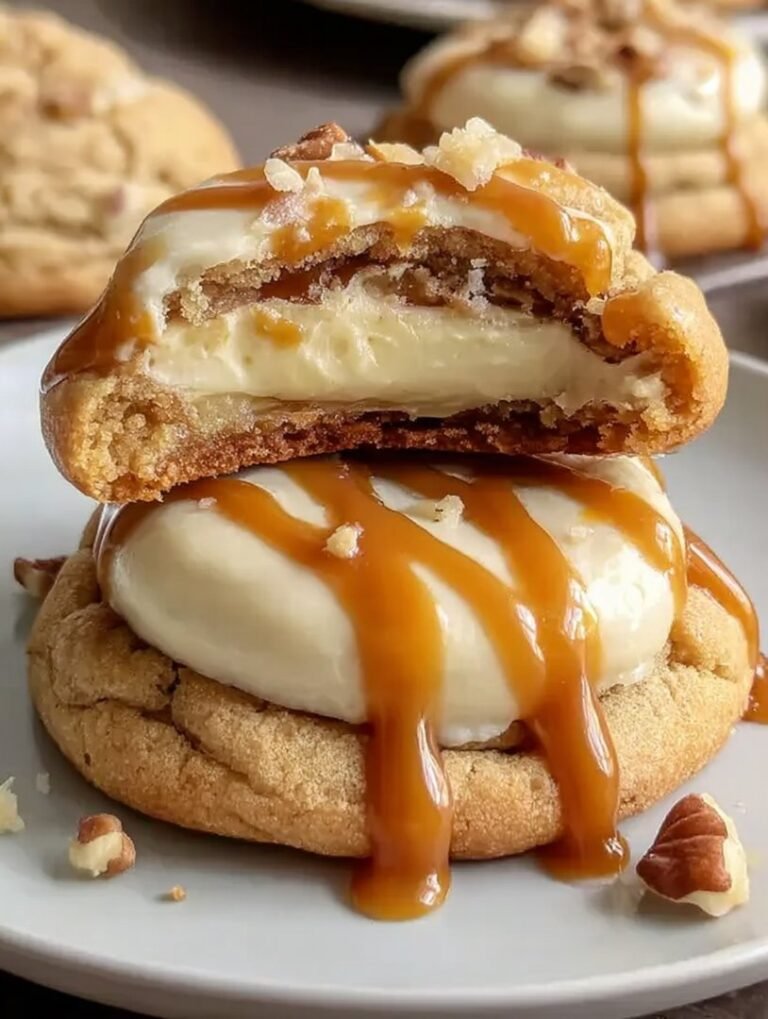
Caramel Cheesecake Cookies
These Caramel Cheesecake Cookies deliver ultimate decadence! Crisp edges yield to a soft, tangy cream cheese center, topped with gooey caramel. Preheat to 350°F.
- Total Time: 35 minutes
- Yield: 4 servings 1x
Ingredients
- 1 1/2 cups all-purpose flour
- 1/2 teaspoon baking powder
- 1/2 cup (1 stick) unsalted butter, softened
- 4 oz cream cheese, softened
- 1/2 cup granulated sugar
- 1 teaspoon vanilla bean paste
- 1/4 cup thick caramel sauce (such as dulce de leche)
Instructions
- Step 1: Preheat the oven to 350°F (175°C). Line two baking sheets with parchment paper. In a medium bowl, whisk together the flour and baking powder, and set aside.
- Step 2: In a large mixing bowl, beat the softened butter, cream cheese, and granulated sugar until light and fluffy (about 2 minutes). Beat in the alcohol-free vanilla extract until just combined.
- Step 3: Gradually add the dry flour mixture to the wet ingredients, mixing on low speed until a soft dough forms. Avoid overmixing.
- Step 4: Scoop the dough into 1.5-inch balls and place them two inches apart on the prepared baking sheets. Use the back of a teaspoon or your thumb to create a deep indentation or "well" in the center of each cookie ball.
- Step 5: Fill each indentation with approximately 1/2 teaspoon of the thick caramel sauce. Bake for 12-14 minutes, or until the edges are lightly golden brown. Let cool on the baking sheet for 5 minutes before transferring to a wire rack to cool completely.
Notes
- Due to the cream cheese content, store leftover cookies in an airtight container in the refrigerator for optimal freshness and texture.
- If serving chilled cookies, warm them briefly in the microwave for 10-15 seconds to soften the cheesecake base and make the caramel center gooey again.
- For a decadent finish, sprinkle the warm cookies with a tiny pinch of flaky sea salt just before serving to enhance the richness of the caramel.
- Ensure your caramel is very thick and do not overfill the indentation wells, as runny or excess caramel will bubble out and potentially burn the cookie edges during baking.
- Prep Time: 15 minutes
- Cook Time: 20 minutes
- Method: Stovetop
- Cuisine: American
FAQs
Can I freeze my Caramel Cheesecake Cookies?
Absolutely! These treats freeze beautifully, extending their shelf life significantly. Once they have completely cooled, transfer them to an airtight container, ensuring you separate the layers with parchment paper to prevent sticking. They can last happily in the freezer for up to three months. To enjoy them again, simply thaw them overnight in the refrigerator. A quick tip: slightly warming them before serving enhances the buttery cookie base and softens the luscious cream cheese filling, making them taste freshly baked.
Why do my Caramel Cheesecake Cookies crack while baking?
Cracking often happens when the cheesecake filling bakes too quickly or encounters a sudden temperature change during cooling. To minimize this, ensure your cream cheese is completely softened before mixing—cold ingredients tend to cause a lumpy batter that stresses during expansion. Additionally, resist the urge to overbake. The cookies are done when the edges of the filling are set but the very center still has a slight wobble. Allowing them to cool gradually, perhaps inside the oven with the door slightly ajar for the first ten minutes, also helps maintain that smooth, perfect surface.
What is the best way to store leftover Caramel Cheesecake Cookies?
Storing these delicate Caramel Cheesecake Cookies correctly is crucial because of the cream cheese filling. You must always refrigerate them. Place the cooled cookies in a sealed container; a single layer works best if space allows, but if stacking, definitely use wax paper in between. They will maintain their incredible texture and flavor for about 4 to 5 days in the chilled environment. If you plan on serving them later, let them sit out on the counter for about 15 minutes before plating, as the filling’s flavor is much more pronounced when slightly warmer than straight from the fridge.
Can I use low-fat cream cheese for the filling?
While you certainly can substitute low-fat cream cheese, be aware that it affects the final texture of the filling. Standard full-fat cream cheese provides the necessary structure and richness that prevents the filling from becoming overly watery or collapsing after cooling. If you opt for the reduced-fat version, make sure it is the block variety, not the whipped kind, and drain any excess moisture you notice before mixing. This modification may require a slightly longer baking time to ensure the center sets properly, maintaining the structural integrity of your delicious baked treat.



Leave a Comment